

Roller Shades vs. Blinds: A Texas Homeowner's Honest Comparison
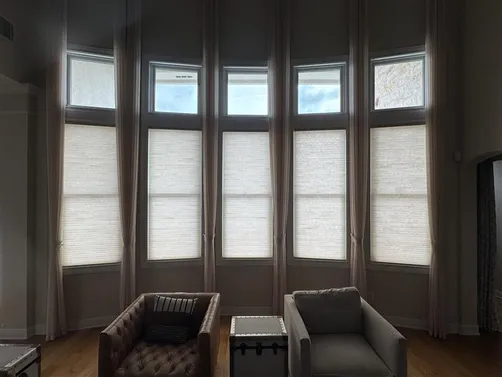
Blinds have been the default window covering in Texas for decades. But roller shades are rapidly replacing them — and there are good reasons why. Here's a fair comparison.
The Great Debate: Roller Shades or Blinds?
If you're building a new home or replacing window coverings in Texas, you'll face this decision at some point. Blinds (horizontal slat blinds, faux wood, or real wood) have been the standard for decades. Roller shades are the newcomer that's been gaining ground fast — and for good reasons that go beyond aesthetics.
What Are Roller Shades?
Roller shades are a single panel of fabric that rolls up around a tube at the top of the window. They come in dozens of fabric types — from sheer (which filter light while maintaining a view) to blackout (which block light completely). They can be operated manually via a chain or spring mechanism, or motorized for remote or automated control.
What Are Blinds?
Blinds consist of individual horizontal or vertical slats that tilt to control light. They're available in aluminum, vinyl, faux wood, and real wood. You adjust the angle of the slats to control how much light enters, and raise or lower the entire assembly to fully expose or cover the window.
Head-to-Head Comparison
| Factor | Roller Shades | Blinds |
|---|---|---|
| Aesthetics | Clean, minimal, modern look. No visible slats or cords. Huge fabric variety. | Classic look. Can feel dated in modern interiors. Visible slats and hardware. |
| Light Control | Depends on fabric opacity. Sheer to full blackout. No partial tilt option. | Precise tilt control. Angle slats up, down, or fully open. Good for partial light management. |
| UV Protection | Solar fabrics block 90–99% of UV. Comparable to window film when lowered. | Moderate UV block when closed. UV passes between slats when tilted. |
| Dust & Cleaning | Flat fabric surface — wipe down or vacuum occasionally. Low maintenance. | Individual slats collect dust on top and bottom surfaces. Cleaning 20 slats per window is tedious. Texas dust makes this worse. |
| Durability | Fabric lasts 7–12 years. No moving slat parts to break. Fewer failure points. | Slat cords and tilt mechanisms wear out. Individual slats can bend or crack. Typical lifespan 5–8 years for quality blinds. |
| Child & Pet Safety | Cordless and motorized options eliminate cord hazards entirely. | Corded blinds are a documented strangulation risk for children. Cordless options exist but cost more. |
| Motorization | Excellent. Roller shades are the easiest window covering to motorize. Integrates with smart home systems. | Possible but less common and more expensive. The slat mechanism adds complexity. |
| Cost | $150 – $600 per window installed (varies by fabric and motorization). | $80 – $400 per window installed (varies by material). |
Why Texas Homes Are Switching to Roller Shades
Three Texas-specific factors are driving the shift:
- Dust: Texas is dusty — especially in Central Texas with cedar pollen and caliche soil. Blinds with 20+ slats per window accumulate dust rapidly and are a pain to clean. Roller shades have a single smooth surface that takes seconds to wipe down.
- Heat management: Solar roller shade fabrics are specifically engineered to reject solar heat while maintaining views. They function like window film in a moveable format. Blinds block light but don't reject heat as effectively — the slats absorb heat and re-radiate it into the room.
- Modern architecture: New construction in Austin, Houston, and San Antonio trends toward large windows and clean interior lines. Roller shades complement this aesthetic far better than traditional blinds.
When Blinds Still Make Sense
Not everyone should switch. Blinds are still a good choice if:
- You need precise, partial light control (tilting slats to redirect light without fully closing).
- You're matching existing blinds in other rooms and want consistency.
- Budget is the primary concern and you don't need motorization.
- You prefer the traditional aesthetic of real wood blinds in a rustic or traditional interior.
The Best of Both Worlds
Some of our clients pair sheer roller shades with blackout roller shades on the same window — a dual-shade system that gives you filtered daylight or total darkness on demand. Others combine roller shades with window film for the ultimate in thermal control. There's no one-size-fits-all answer, which is why we walk you through samples during an in-home consultation where you can see the fabrics against your actual windows and light conditions.
Ready to Take the Next Step?
Get a Free Estimate in Austin
No pressure. No obligation. Your local Shades of Texas expert will walk you through the options.