

Commercial Window Film: What Every Texas Business Owner Should Know
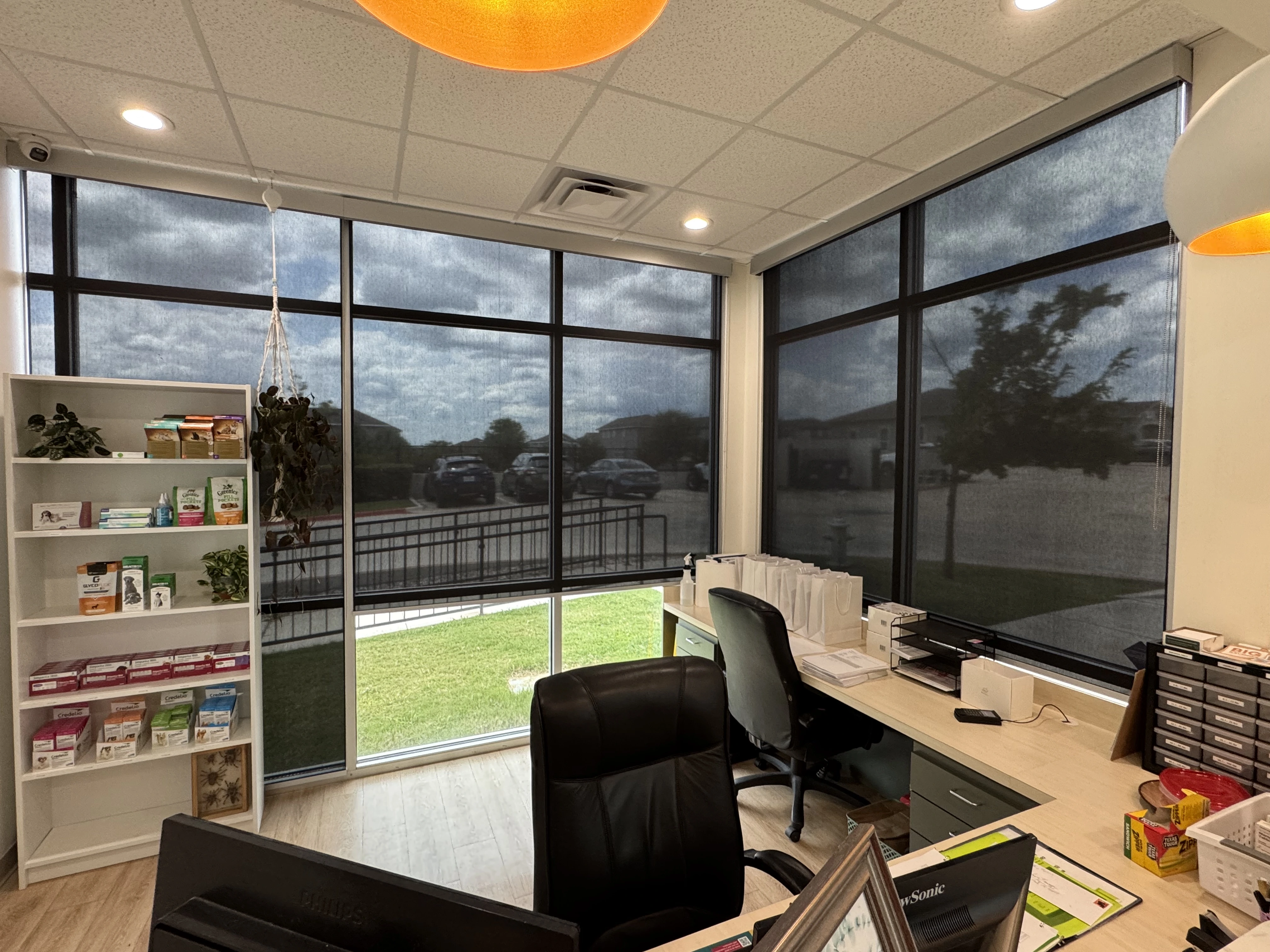
Commercial window film can cut office cooling costs, eliminate glare, and protect interiors — but the commercial decision is different from residential. Here's what matters for Texas businesses.
Why Commercial Window Film Is Different
If you're a business owner, property manager, or facilities director researching window film for a commercial building in Texas, the residential guides you've been reading don't fully apply. Commercial projects involve different glass types, larger scales, different performance priorities, and lease/ownership considerations that change the calculus entirely.
The Business Case for Commercial Window Film
The core value proposition for commercial window film in Texas comes down to four measurable benefits:
1. Energy Cost Reduction
Commercial buildings in Texas spend heavily on cooling — it's typically the largest operating expense after payroll and rent. Window film reduces solar heat gain through glass by 40–80% depending on film type, which directly reduces HVAC demand. For a typical mid-rise office building in Austin or Houston, this translates to 10–20% reduction in annual cooling costs.
The ROI timeline is faster for commercial properties than residential because the savings are proportional to the glass area — and commercial buildings have a lot of glass. Payback periods of 3–5 years are common, with the film continuing to perform for 15–20 years after that.
2. Glare Reduction
Screen glare is the number-one workplace comfort complaint in glass-heavy offices. Employees facing windows spend their days squinting at monitors, closing blinds (which eliminates the natural light that makes the space pleasant), or repositioning desks. Quality solar film reduces glare by 40–70% while maintaining natural light — solving the problem without the trade-off.
3. UV Protection for Interiors
UV radiation fades carpet, furniture, merchandise, and artwork. In retail environments, this means product damage. In offices, it means premature replacement of furnishings. Premium commercial films block 99%+ of UV radiation, extending the life of interior finishes significantly.
4. Tenant Comfort and Retention
For property owners and managers, tenant satisfaction directly affects occupancy rates and lease renewals. Hot spots near windows, uneven temperatures across floor plates, and glare complaints are all solvable with window film — often at a fraction of the cost of HVAC upgrades or window replacement.
Types of Commercial Window Film
| Film Type | Best For | Key Performance |
|---|---|---|
| Solar Control Film | Offices, retail, restaurants | Blocks 40–80% solar heat, reduces glare, maintains views |
| Low-E Retrofit Film | Older buildings with single-pane glass | Adds insulating properties similar to Low-E glass at a fraction of the cost |
| Safety & Security Film | Ground-floor retail, government buildings, schools | Holds glass together on impact, deters smash-and-grab, blast mitigation |
| Decorative & Branding Film | Storefronts, lobbies, conference rooms | Custom patterns, logos, frosted effects for privacy and branding |
| Anti-Graffiti Film | Retail storefronts, transit-facing glass | Sacrificial clear film that absorbs graffiti scratching and etching — peel and replace instead of replacing glass |
Commercial vs. Residential: Key Differences
- Glass compatibility: Commercial buildings often use tempered, laminated, insulated, or Low-E glass. Not all films are compatible with all glass types — thermal stress analysis is critical to avoid seal failure or glass breakage. A qualified installer evaluates every glass type in the building before recommending film.
- Scale pricing: Commercial projects are priced per square foot, not per window. Volume typically brings the per-square-foot cost down significantly compared to residential pricing.
- Warranty scope: Commercial film warranties from manufacturers like 3M cover the film for 15 years on exterior vertical glass. Installation warranties vary by installer.
- Building codes: Some municipalities have reflectivity limits for commercial buildings. Your installer should verify compliance with local ordinances.
- Scheduling: Commercial installations can often be done outside business hours to avoid disrupting operations. Large buildings may be phased over multiple days or weekends.
The Hidden Cost of NOT Filming Commercial Glass
Many building owners compare the cost of window film against doing nothing. But doing nothing has costs too:
- Higher energy bills every month for the life of the building.
- Accelerated fading of carpet, furniture, and finishes — replacement cycles shorten by 30–50%.
- Tenant complaints and potential turnover from comfort issues.
- Greater HVAC wear — systems running harder to compensate for solar load have shorter equipment life and higher maintenance costs.
When you factor in these ongoing costs, commercial window film isn't an expense — it's an investment that pays returns for 15–20 years.
Getting a Commercial Quote
Commercial projects start with a site assessment. Our team visits the property, identifies glass types on each elevation, measures the total area, evaluates sun exposure and orientation, and provides a detailed written proposal with film specifications, pricing, timeline, and projected energy savings. There's no cost for the assessment and no obligation.
Shades of Texas has been installing commercial window film across Austin and Houston for over 35 years — from single-story retail storefronts to multi-story office buildings. We carry the full 3M commercial product line and handle projects of every scale.
Ready to Take the Next Step?
Get a Free Estimate in Austin
No pressure. No obligation. Your local Shades of Texas expert will walk you through the options.