

How to Choose the Right Window Shades for a Texas Home
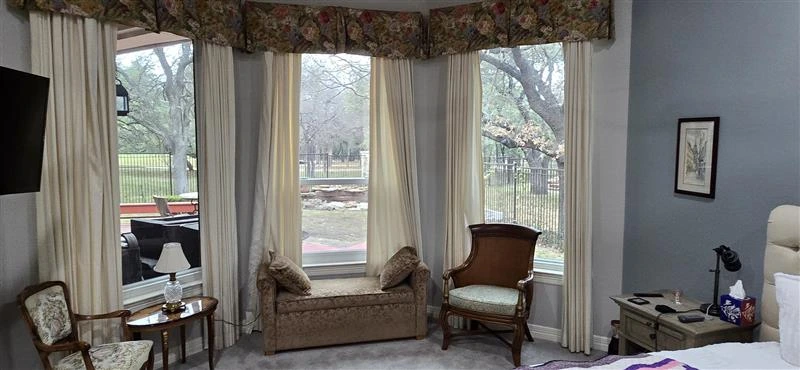
From solar shades to blackout rollers to woven wood — the window shade market is overwhelming. Here's a practical guide to matching shade type to room function and Texas climate needs.
Matching Window Shades to Your Texas Home
Texas homes have specific requirements that make shade selection more important than in cooler climates. You're managing intense heat gain, UV exposure, and privacy — often in rooms where you also want outside views. Here's how to approach the decision.
Solar Shades
Solar shades are the most popular choice for main living areas in Texas. They're designed to block solar heat and glare while preserving your view of the outdoors — the openness factor varies from about 1% (maximum privacy) to 14% (very open, lots of light transmission). The tighter the weave, the more heat and UV blocked — but the less you see through.
Best for: Living rooms, offices, sunrooms with nice views you want to keep.
Blackout Roller Shades
Blackout shades block 100% of light. Critical for bedrooms, home theaters, and nurseries. Modern blackout rollers come in clean, minimal designs that don't look utilitarian. Pair them with a sheer or solar shade in a double-shade system for main living areas where you want light control options.
Best for: Bedrooms, media rooms, nurseries.
Cellular / Honeycomb Shades
Cellular shades trap air in their honeycomb cells, adding insulation value. Single-cell shades provide light filtering. Double-cell provides better insulation — meaningful on west-facing windows in Texas summers. They're available in translucent and blackout options.
Best for: Energy-conscious applications, bedrooms, hallways.
Woven Wood / Natural Fiber Shades
Made from grasses, reeds, bamboo, and wood — these shades bring warmth and texture. They're not designed for maximum heat rejection (they have gaps), but they're stunning in casual, earthy interiors and reduce harsh glare beautifully.
Best for: Casual living spaces, dining rooms, spaces where aesthetics take priority over maximum performance.
The Practical Texas Rule
South and west-facing windows get hit hardest. Prioritize solar or cellular shades on those exposures with a tight weave (3% openness or less) for meaningful heat control. North-facing windows are more forgiving. East-facing windows are worst in the morning, less of an issue in the afternoon.
Our team provides samples to your home and walks through options in context — you see exactly how they'll look and perform in your actual space before a single nail goes in.
Ready to Take the Next Step?
Get a Free Estimate in Bee Cave
No pressure. No obligation. Your local Shades of Texas expert will walk you through the options.